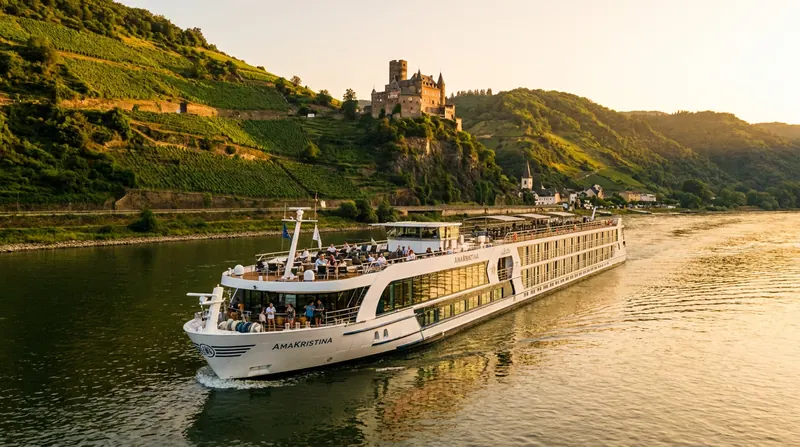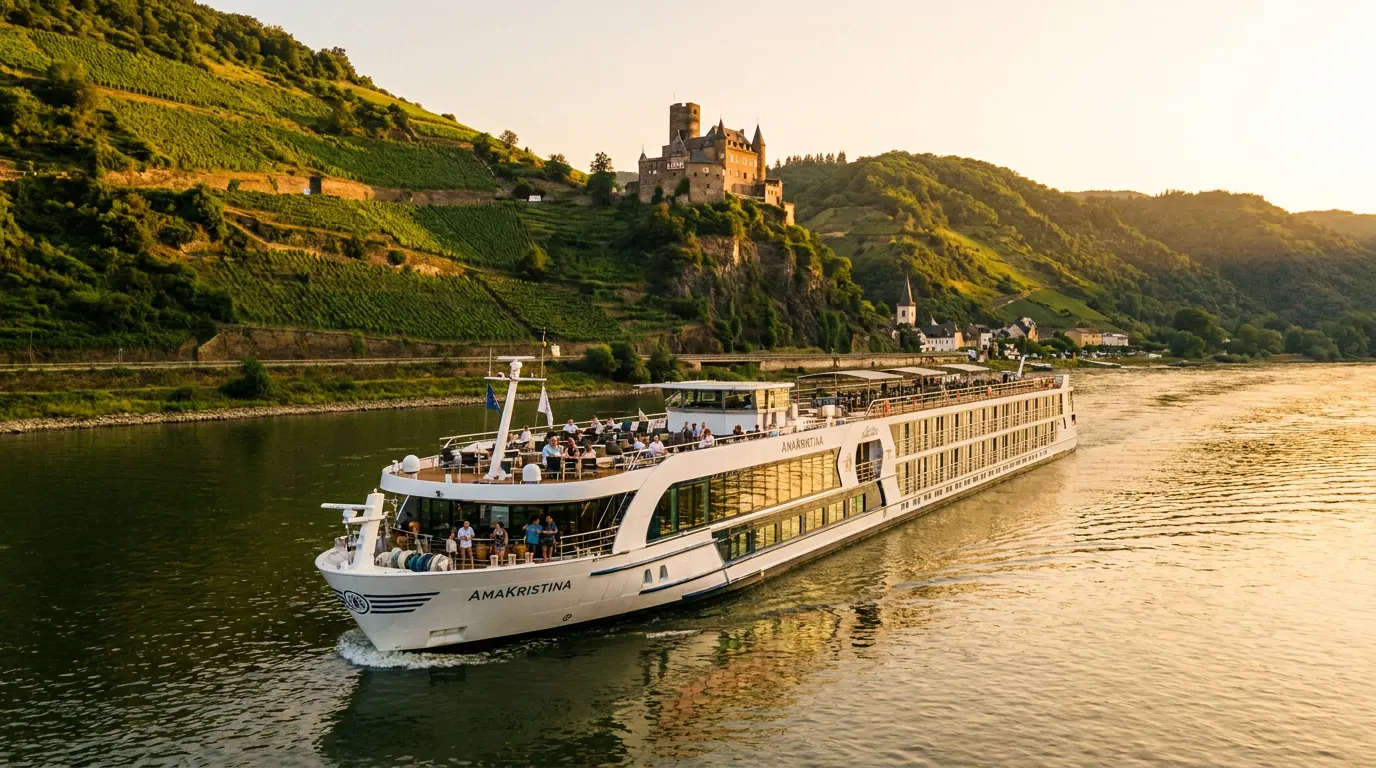
Choose a European river cruise if you want to wake up in a different town or city almost every morning, explore on foot, and travel with a small number of fellow guests at a slower pace. Choose an ocean cruise if you want coastal and island ports, more onboard dining and entertainment, a wider range of cabin and suite types, and the option of sea days. Neither is better in general; the right answer depends on how you like to spend your days, how mobile everyone in your party is, and which places you most want to see.
The most useful way to decide is to compare like with like: a typical 7-night Rhine or Danube river cruise against a 7 to 10-night Mediterranean ocean cruise. The table and sections below do exactly that.
River Cruise vs. Ocean Cruise at a Glance
| 7-night Rhine or Danube river cruise | 7 to 10-night Mediterranean ocean cruise | |
|---|---|---|
| Ship size | Often around 190 guests or fewer | Several hundred guests on luxury lines; thousands on the largest ships |
| Ports | A stop most days, usually close to town | Coastal cities and islands; some ports are far from the sights |
| Sea days | None | Usually one or more |
| Dining | One main restaurant, often an alternative venue | Several restaurants on most ships |
| Evenings | Quiet; lectures, local performers, music | Wider entertainment choice |
| Inclusions | Often excursions and drinks with meals | Varies widely; luxury lines include the most |
| Motion | Calm inland water | Some motion is possible at sea |
Who Should Choose a River Cruise?
River ships on the Rhine and Danube are limited in size by the locks and bridges, so they are long, low and relatively small; Viking's Longships, for example, carry up to 190 guests. The dining room typically has one open seating, and by midweek many guests recognize one another. Some travelers enjoy that sociable, small-ship feel; others find it confining, so it is worth deciding which you are before you book.
The main appeal is geography. Ships often tie up within walking distance of the old town, there are no sea days, and stretches such as the Rhine Gorge or the Wachau Valley are scenery in their own right. Many river lines include a guided excursion in each port and wine or beer with lunch and dinner, which makes budgeting simpler, though inclusions differ by line and should be checked for your sailing. A river cruise suits culturally curious travelers who are comfortable walking and who prefer depth in one region over variety.
Who Should Choose an Ocean Cruise?
Ocean ships range from luxury ships carrying several hundred guests (lines such as Seabourn, Silversea and Regent Seven Seas) to the largest resort ships, which carry several thousand. Royal Caribbean's Icon of the Seas, for example, has a listed maximum capacity of 7,600 guests. At almost every size, ocean ships offer more restaurants, entertainment and onboard space than a river ship can, and they reach coastlines and islands no river connects: the Greek islands, the Dalmatian coast, the Norwegian fjords.
Sea days are a matter of taste. On a well-run ship, they offer time for the spa, enrichment lectures, a long lunch and simple rest between busy port days. Travelers who dislike them can choose port-intensive itineraries. An ocean cruise suits travelers who want variety of destinations and onboard choices, families with a wide range of ages, and anyone who prefers not to be on the move every single day.
Mobility: Smaller Is Not Automatically Easier
It is easy to assume a small river ship will be simpler for travelers with limited mobility. Often the reverse is true. Many river ships have elevators, but they may not reach every deck, and the sun deck is frequently reached by stairs. In busy ports, river ships often moor side by side, so guests may cross one or two other ships to reach the shore. Gangways can be steep when water levels are high or low, and most excursions are walking tours over cobblestones and hills.
Larger ocean ships usually have more elevators, wider corridors and dedicated accessible cabins, though some ports require tender boats, and walking distances on very large ships can be long. Whichever you choose, ask about the specific ship's elevators, accessible cabins, mooring arrangements and excursion walking levels before booking.
Can You Combine a River Cruise and an Ocean Cruise?
Yes. For travelers with two weeks or more, a river segment followed by an ocean segment can show two very different sides of Europe. For example, a week on the Danube from Passau through Vienna to Budapest could be followed, after a short flight, by a week sailing the Greek islands. The contrast between the two paces is part of the appeal. The practical points to plan are the connecting flight, a hotel night between the two cruises, and luggage that suits both a compact river cabin and a longer ocean voyage. Our guide to choosing a European river cruise covers rivers, lines and seasons in more detail.
Making the Choice
If you want to wake up in Vienna, Strasbourg or a Wachau wine village, explore slowly on foot, and dine with the same small group each evening, choose a river cruise. If you want Santorini, Dubrovnik and the Amalfi Coast in a single voyage, with dining variety and entertainment for evenings after the ports, choose an ocean cruise. If you want the most personal service and fewest fellow guests, compare a premium river line with a small luxury ocean ship on the same dates. Our advisors can help with either: see our river cruise and luxury ocean cruise planning pages.
Still deciding between the two formats for a specific trip? Ask an Adler Travel cruise specialist to compare a river and an ocean itinerary for your dates.
Frequently Asked Questions
What is the main difference between a river cruise and an ocean cruise?
River cruises use small ships that stop at a town or city most days, with no sea days. Ocean cruises use larger ships with more dining and entertainment, and reach coastal cities and islands, usually with some days at sea.
Are river cruises all-inclusive?
Many river cruises are largely inclusive, often covering a shore excursion in each port and wine or beer with meals. Exact inclusions vary by line and sailing, so confirm them before booking.
Is a river cruise better for travelers with limited mobility?
Not necessarily. River ships may lack elevators to every deck, often moor alongside other ships, and most excursions are walking tours. Larger ocean ships usually have more elevators and accessible cabins, but check the specific ship either way.
Do people get seasick on a river cruise?
Seasickness is rarely a concern on a river cruise because the ships sail on calm inland waterways rather than open sea.
Can you combine a river cruise and an ocean cruise?
Yes. A common pattern pairs a week on a European river, such as the Danube, with a week on an ocean ship in the Mediterranean, with a hotel night and a short flight in between.