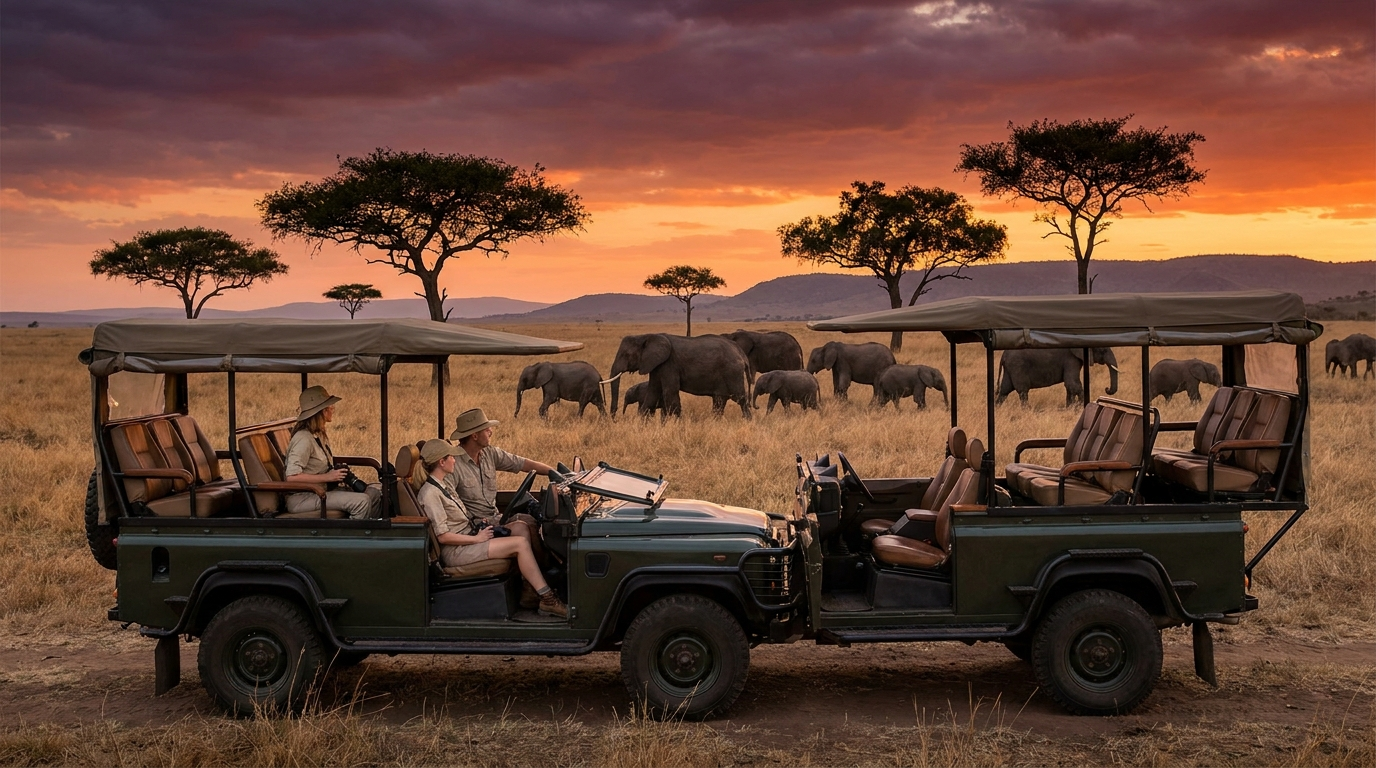
An African safari is one of the most transformative travel experiences available to a human being, and also one of the most consequential planning decisions, because the difference between a good safari and an extraordinary one comes down entirely to the choices made before you board the plane. I've been arranging safari travel for more than twenty years, and I can tell you with certainty that the safaris that change people, the ones that produce tears at departure, that generate repeat visits within eighteen months, that become the reference point against which all other travel is measured, are not the product of luck or simply a favorable wildlife season. They are the product of specific, informed decisions made during the planning process.
The single most important decision in safari planning is not which country you go to. It is which camp you stay in. The camp determines the quality and experience of your guide, and your guide is the single most important variable in the quality of your safari experience. A great guide in a mediocre location will produce a better safari than a mediocre guide in the finest location in Africa. The top-tier camp operators, Singita, andBeyond, Wilderness Safaris, &Beyond, Conservation Corporation, have invested in guide training and retention programs that produce consistently exceptional outcomes. The difference between these operators and the mid-range alternatives is not primarily the quality of the tents. It is the quality of the people who take you into the bush.
Country Selection
For first-time safari travelers, I recommend Kenya or Tanzania as the primary destination, with a strong preference for Tanzania's northern circuit: the Serengeti, Ngorongoro Crater, and Tarangire. The combination of Big Five access and landscape variety is hard to beat. The Serengeti is the finest single wildlife area in the world for sheer density of large mammals, the Ngorongoro Crater is a geological marvel that concentrates game in a caldera the size of a small county, and Tarangire offers elephant concentrations in the dry season that are genuinely unmatched anywhere in Africa.
Botswana is, in my view, the finest overall safari destination on the continent for the traveler who has some experience and is prepared for a more remote, more expensive, and logistically more complex trip. The Okavango Delta, an inland delta where the Okavango River fans out across the Kalahari desert to create a network of channels, lagoons, and islands, is one of the most extraordinary ecosystems on earth. The Linyanti and Chobe regions offer different experiences: Chobe has some of the highest elephant densities in Africa, and the sunset boat safaris on the Chobe River, with elephants and buffalo drinking in the dying light, are among the most memorable single experiences in African wildlife travel.
Timing
The conventional wisdom is that the dry season, roughly June through October in east and southern Africa, is the best time for safari because the vegetation is sparse, water sources are concentrated, and animals gather predictably around the remaining water. This is true, and for first-time travelers, I generally recommend the dry season for exactly these reasons. But the wet season (generally November through April, though this varies significantly by location) has its own profound attractions that experienced safari travelers specifically seek out.
The green season in the Serengeti and Ngorongoro produces extraordinary birding, the wildebeest calving season in the southern Serengeti (January through March) is one of the most dramatic wildlife events in Africa, and the landscape itself is photogenic in a completely different way from the golden-grass dry season: vivid green against stormy skies, with rivers running full and waterfalls appearing where there is only dry stone for six months of the year. The crowds are substantially lower, the prices are meaningfully reduced, and the operators who have not closed their camps for the green season offer a quality of attention that peak season simply does not allow.
"The moment a leopard drops silently from a tree and walks directly toward the vehicle without any awareness of your presence, that moment changes your understanding of what it means to be a human being in the world. No photograph captures it. You have to be there."
The Camp Is the Experience
The best luxury safari camps share certain qualities that have nothing to do with the thread count of the linens or the quality of the wine cellar, though both of those things are typically excellent. They share: a location that provides exclusive or near-exclusive access to a defined wildlife area, a staff-to-guest ratio that produces genuinely personal service rather than service delivery, a guide team that has been operating in this specific ecosystem long enough to know individual animals by sight and to anticipate behavior rather than simply react to it, and a kitchen that takes the food program seriously as an expression of the overall experience.
Singita Grumeti in the western Serengeti corridor is perhaps the finest individual property in east Africa: a private concession of extraordinary size adjacent to the Serengeti National Park, with game that has been habituated to vehicles over decades and a habitat that is simply extraordinary. The Grumeti Reserve's anti-poaching program, funded in part by the camp fees, has produced a wildlife recovery that is measurable and ongoing. Staying there means participating in something larger than a holiday. I've sent many clients there and have never received a message afterward that was less than overwhelmed.
The Addition of Gorilla Trekking
For safari travelers who have already seen the east or southern African circuit, I strongly recommend adding a gorilla trekking experience in Uganda or Rwanda to a return trip. Mountain gorilla trekking in Bwindi Impenetrable Forest or Volcanoes National Park produces an encounter with a non-human primate in a natural forest environment that is unlike any wildlife experience I can name. The gorilla families have been habituated to human presence over decades, and a permitted one-hour visit, typically preceded by a two-to-four-hour hike through dense forest, produces an intimacy of encounter that the open savanna cannot replicate. Sitting five meters from a silverback in his forest home, watching a juvenile play in a fig tree above you, is a moment that rearranges your sense of what matters. I recommend it to every safari client who is physically capable of the trek.

